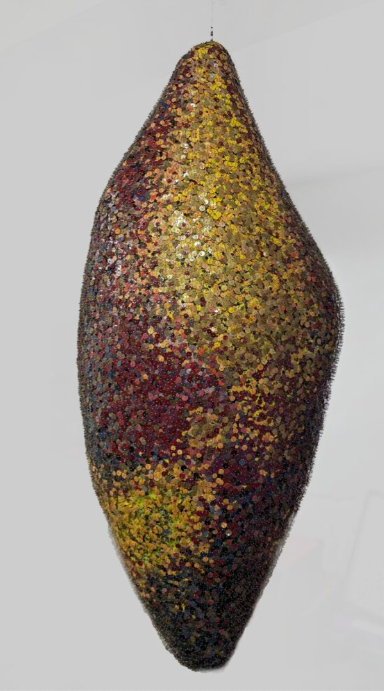

Pg Art Gallery is pleased to host Ceren İren’s exhibition titled “Superposition” between January 31 – March 7, 2026.
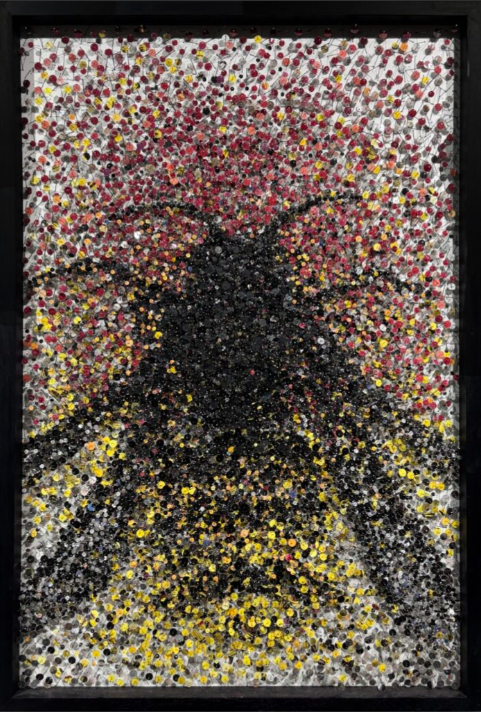
Honeybees have long held a place in humanity’s collective memory as symbols of abundance, rebirth, and collaborative creation. In Ancient Egypt, honeybees were believed to have emerged from the tears of the god Ra falling onto the earth, making them a divine gift bestowed upon humankind. When these mythological origins intersect with the impeccable organization of bee societies, honeybees transcend being merely small elements of nature and become symbols through which to contemplate social order, transformation, and communal life.
Ceren İren reconstructs this multilayered field of meaning—formed by the bees’ forms and behaviors—within her own artistic practice. For her, the hive becomes more than an observational site; it transforms into a source that reshapes her mode of production. The dynamism of bee society, its system of collective labor, and particularly the organized clustering that occurs during swarming form the core trajectory of the works. A swarm made up of thousands of honeybees organizes itself around the queen, moves collectively as a cluster, abandons its hive, and covers the new surface on which it settles in a mass; this collective behavioral pattern symbolizes the end of the old order within the hive and the beginning of a new life.
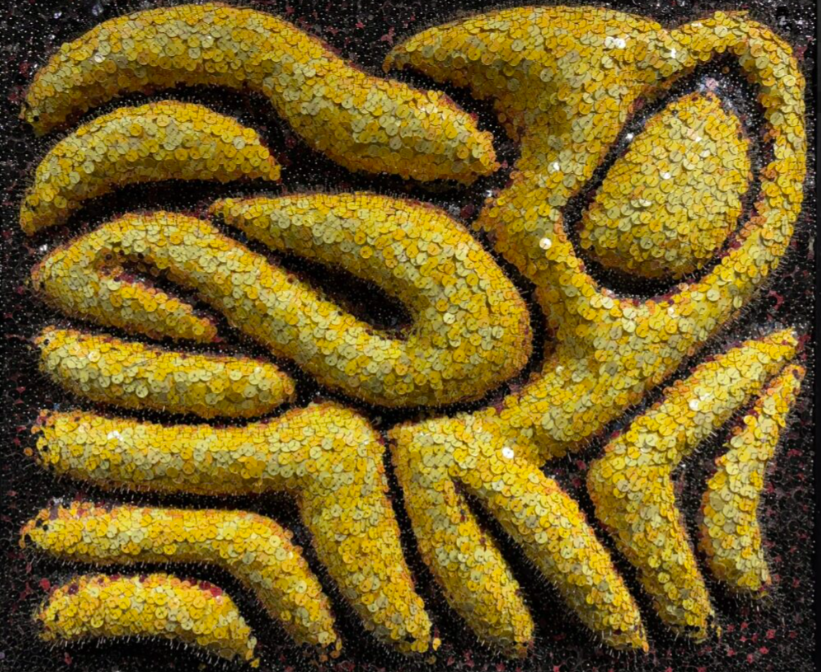
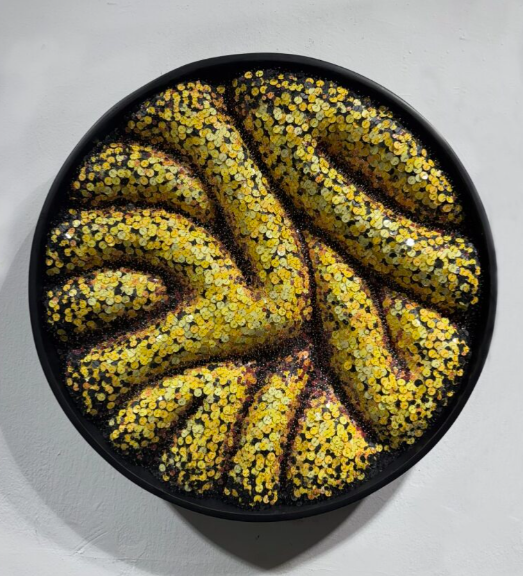
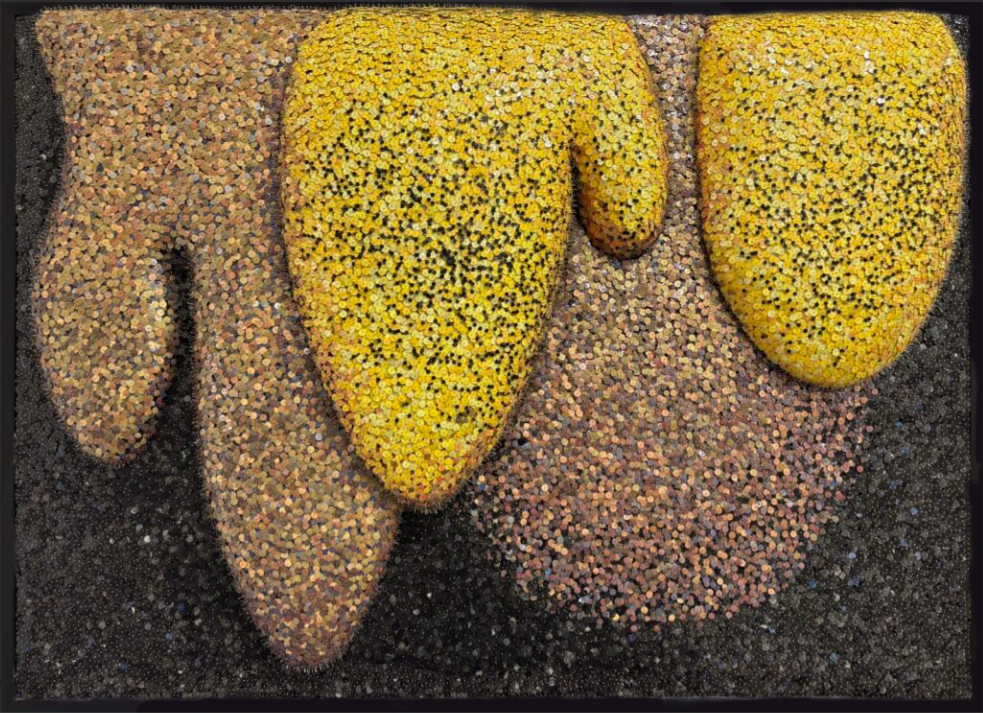
The production process possesses a rhythmic structure reminiscent of the hive’s multi-stage functioning. By piercing colorful papers and pinning the resulting circles onto the surface one by one, the artist generates small but continuous repetitions that echo the division of labor inside the hive. This layered application, similar to the sequential process through which bees transform nectar into honey, evolves into a structural density composed of long-term repetitions.
Superposition is a state of overlap and coexistence that describes the convergence of multiple conditions into a single form on both physical and conceptual levels. In the condensed forms that lose their boundaries to create a new unity, uncertainty and simultaneity coexist on the same surface. During this process, the distinction between the bee and the honeycomb dissolves within the emerging texture, forming an integrated structure that behaves like a single organism. Just as honeybees instinctively fill every gap within the hive, the same impulse toward accumulation, densification, and the elimination of emptiness manifests itself in these works.
The exhibition makes visible how the forms and behaviors of bee society intersect with human states of making, repositioning, and transformation. The circles, pins, and honeycomb-like weavings that cover the surface constitute the re-materialized expression of the bees’ collective structure within the artist’s production practice.