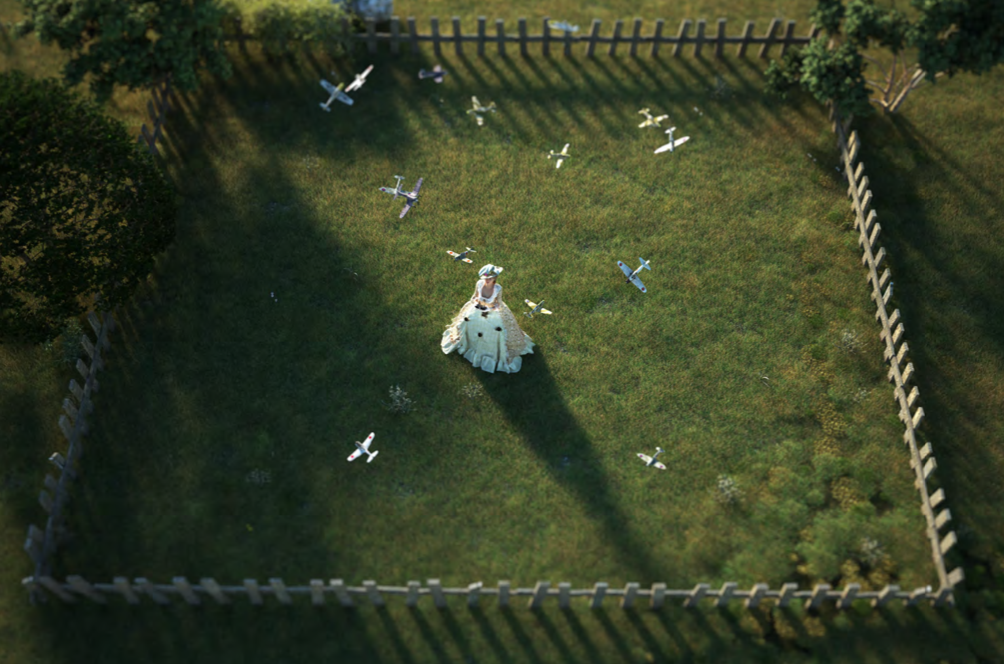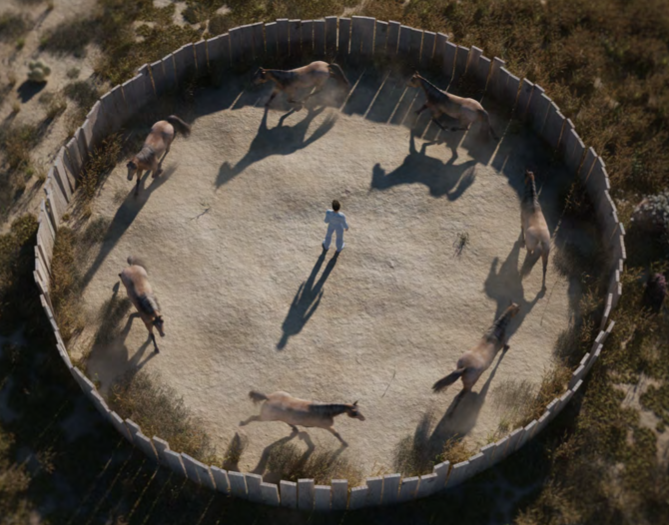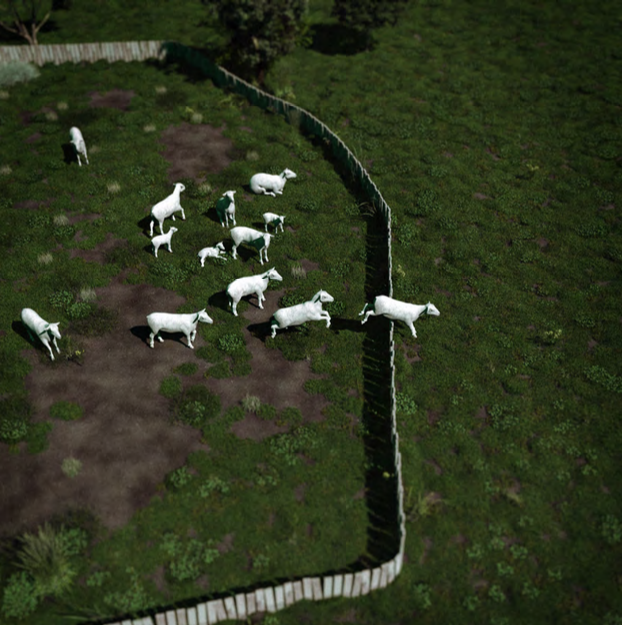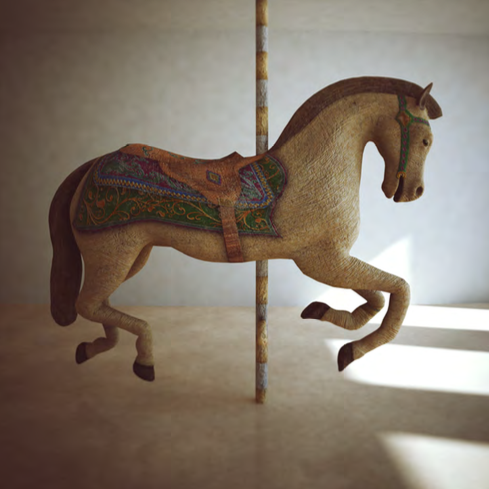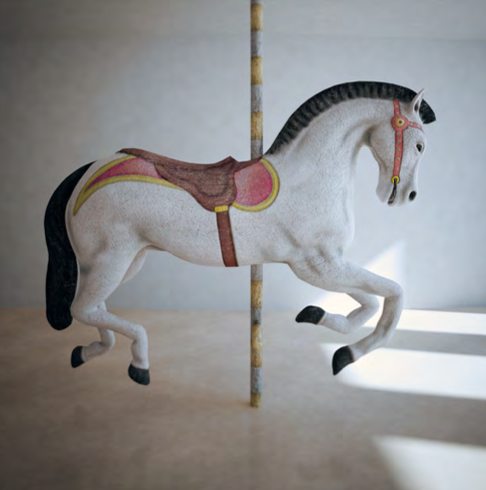

Kerem Ozan Bayraktar will present a selection of works produced with 3D visualization software in his exhibition titled Circus, on view between October 3 and November 3, 2013. Circus is an exhibition about spectacle, closed systems, and dance.
For a long time, the artist has been working on the relationship between images and “meaning.” By simulating in a digital environment the structural qualities that allow the photographic image to transform into a document over time, he produces both moving and still visuals. Bayraktar’s works operate within a spectrum ranging from computer graphics that emphasize artificiality to photorealistic visualizations, playing with the historical habits through which we relate to photography.
In this series, the aesthetics of simulation games such as SimCity and the fake analog filters that have become popular through mobile applications like Instagram are addressed through the artist’s frozen, distant, and repetitive visual language. These fields can be seen as an evolution of the fictional scenarios Bayraktar previously constructed using models, toys, or empty rooms. Much like the player who assumes the role of God in games such as SimCity or FarmVille, Bayraktar constructs one by one the elements of a timeless and placeless image that attempts to resemble a photograph through computer software, ultimately producing scenes in which theatricality is strongly emphasized. The artist believes that the artist who plays God within the Cartesian universe should reveal the clownishness of this act as much as possible by emphasizing that fantasy itself is a fantasy.
According to Bayraktar, his works are technically entirely meaningless. The artist states that he attempts to approach figurative language in the most absurd way possible and that signs should not be treated as illustrations of any concept or theme, but rather understood as empty illustrations meant simply for the act of “looking.” Bayraktar deliberately constructs associations that might lead viewers to produce narratives or messages, only to ultimately leave them unable to fulfill their desire to connect the image with meaning—thereby creating a sense of emptiness similar to that present in the works themselves.
For this reason, meaning in Bayraktar’s works can only be established through the aesthetics of contemporary images or through abstract relationships between the works themselves. Methods of using images for purposes such as categorization, sampling, or classification reveal indirect similarities among the works throughout the exhibition. The repetition of the same image with different textures, or the exact replication of a structure from one work in another, exposes the industrial infrastructure behind the emergence of computer-generated imagery and draws attention to the nature of the tools through which images are produced.