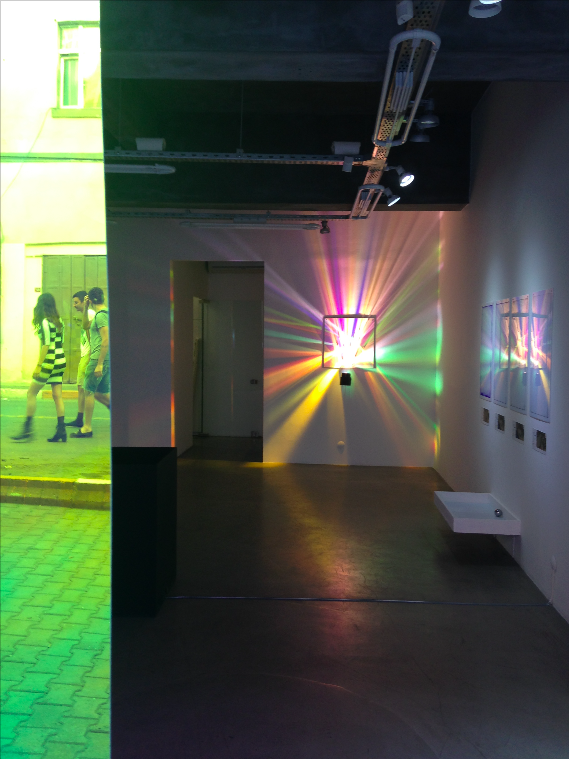

Ayşe Gül Süter’s first solo exhibition, titled ‘Motion’ will be held at Pg Art Gallery between September 4 and September 29.
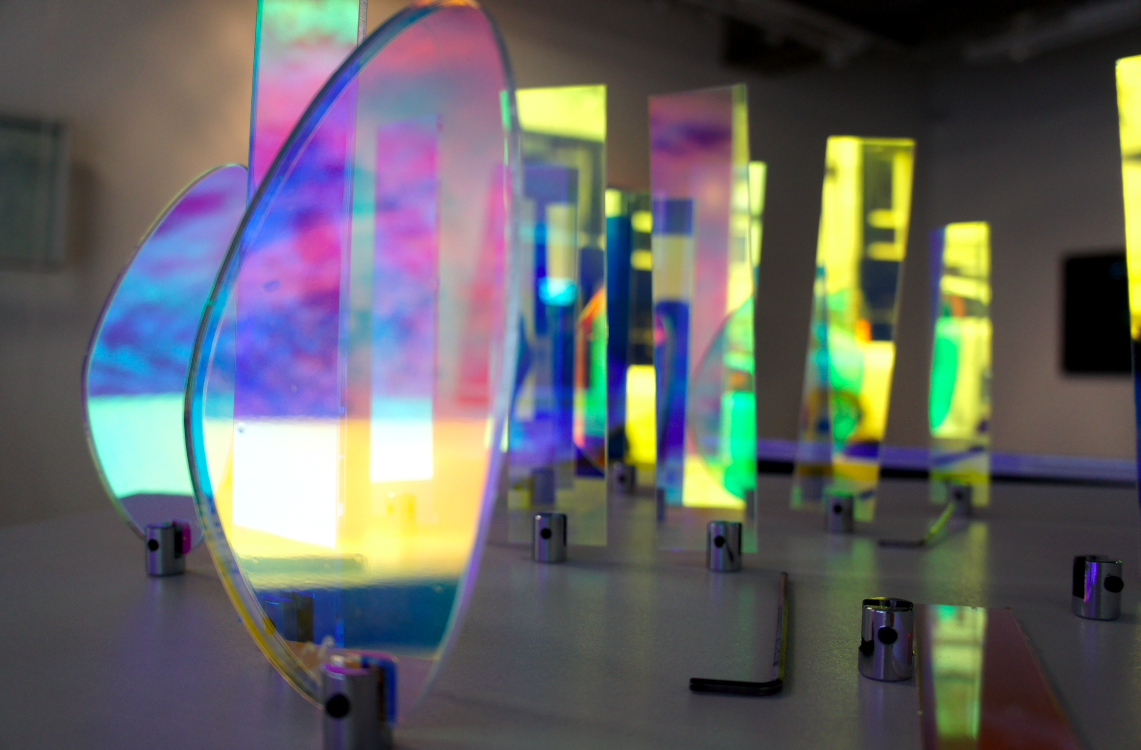
In the experimental works that will be presented in the exhibition Süter delves into the concepts of movement, light, color and time through new media techniques and the use of interactive structures.
The initial idea behind the exhibition took the form of questions such as “How can interactivity could be designed without using any software?” and “Is it possible to investigate the basic problems of new media without optical detectors, touch-operated apparatuses and image manipulation?” These are very significant questions for new media art. Particularly in terms of contemporary interactive structures, most of the time the medium itself turns into a form of “entertainment” rather than the tool it ought to be. In order to avoid addressing the concepts of “interactivity,” “audience” and “experience” in the hierarchical sphere of a single medium, Süter consciously sets aside her technical knowledge and points out that concepts like “light” and “motion” are in fact the essential qualities of art.
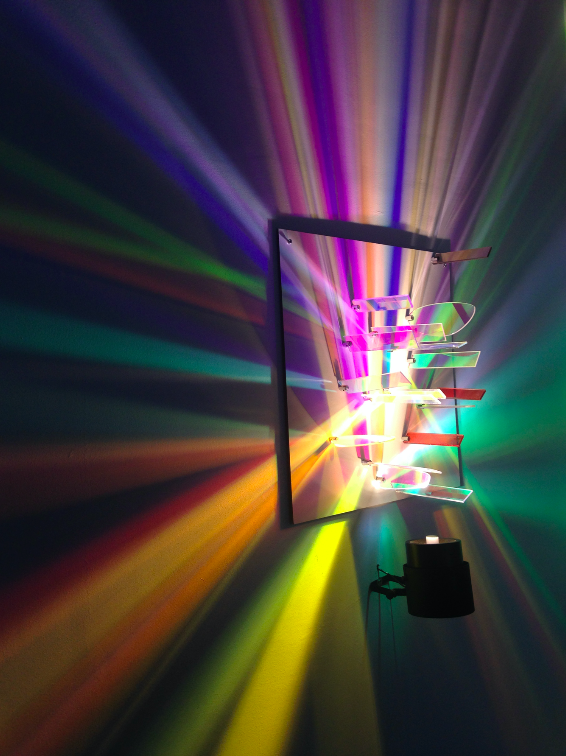
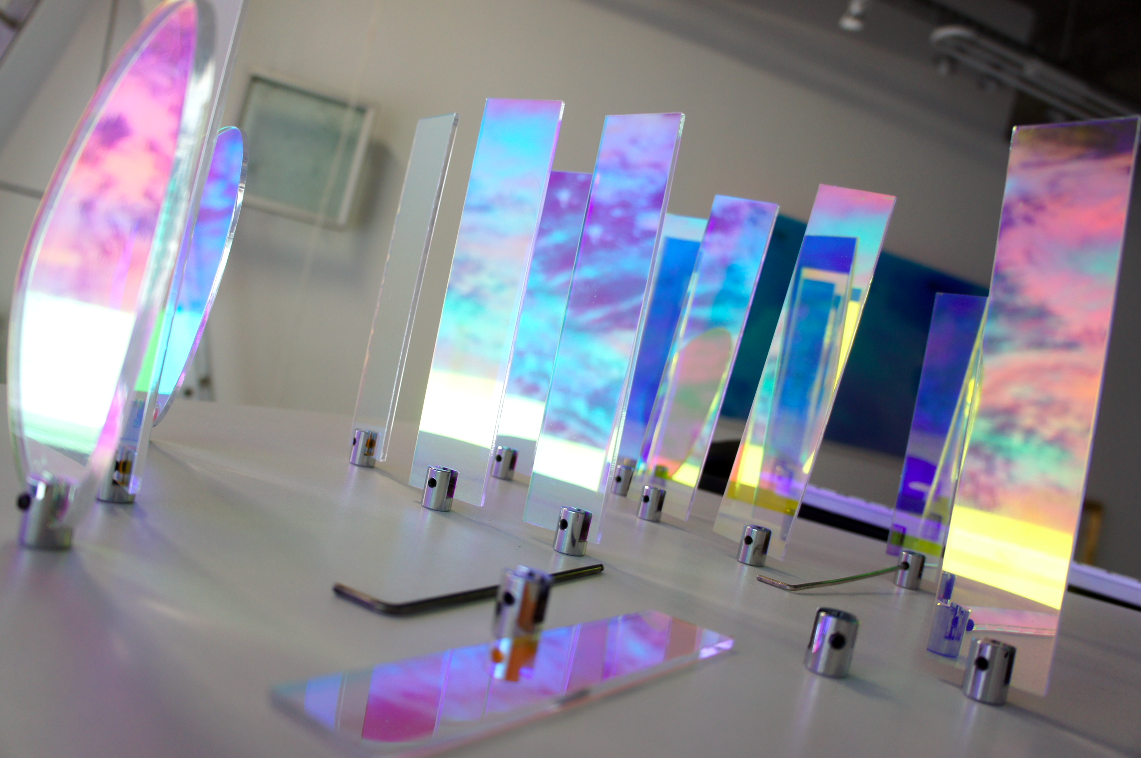
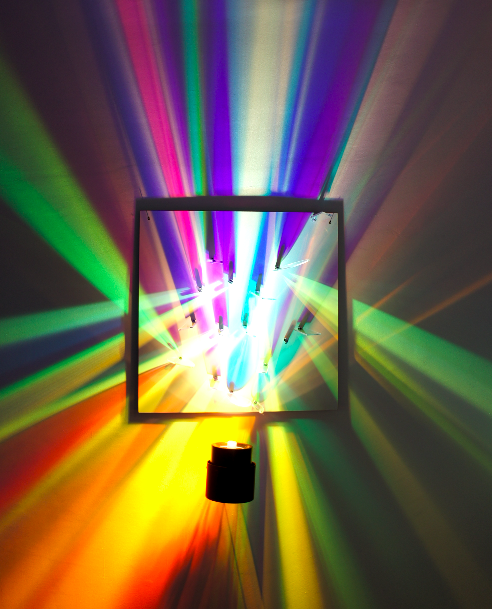
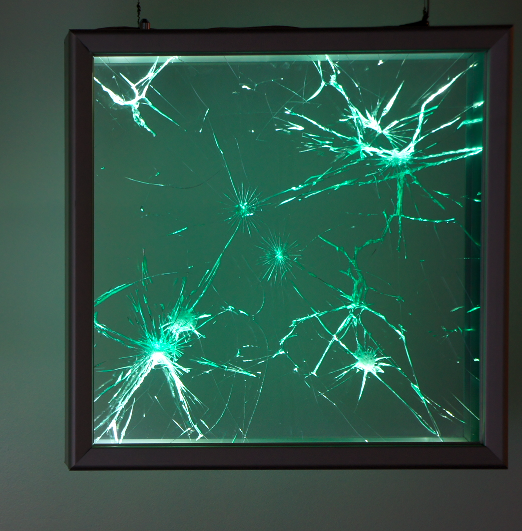
The artist, who spends part of her daily life in an automotive repair shop, often encounters damaged, burnt out cars with broken windows. She carries broken glass pieces from these cars to her workshop and designs various light experiments with them. The analogue animations in the exhibition feature images moving across this layered broken glass. Süter shifts the interactivity from a medium-based structure into life and a psychological experiment, since the images showing up on the artwork are formed according to the visitor’s point of view. At the same time, the artist also demonstrates that broken glass can be programmed without software. The problem of “programmability,” which remains an issue for everything from the Turing machine to the contemporary computer, is discussed via physical materials and real experiences. The broken glass can be said to have memory both metaphorically and technically. Considering the relationship of glass with light, it is possible to say Süter’s own laboratory is producing interactive “photographs.” When the spectator encounters the mirrors and broken glass, this photograph merges with other people’s photographs each time, transforming itself all over again and continuing to be scraped with light.
Interactivity is not merely an optical game, but an experience that enables visitors to grasp the relationship they have with world and objects in it through their own body. Our own distorted body image appearing on the artist’s artworks shows us the significance of both our inner experience of perceiving the world and objects in it and also the importance of our location in space.
Not presenting a static point of view to the visitors, these constantly moving images with multiple perspectives are a sign that art can no longer be framed. It has already turned into a structure that cannot be held in hand. At this point, the spectator should also have a parallel reflex and adopt the same fluidity. Having a single center is not compatible with our lives anymore, either optically or conceptually. Because simple acts we perform with objects such as “looking” and “changing position” are presented in the context of “interactivity,” we see that new media is not science fiction but leaks into our ordinary lives.