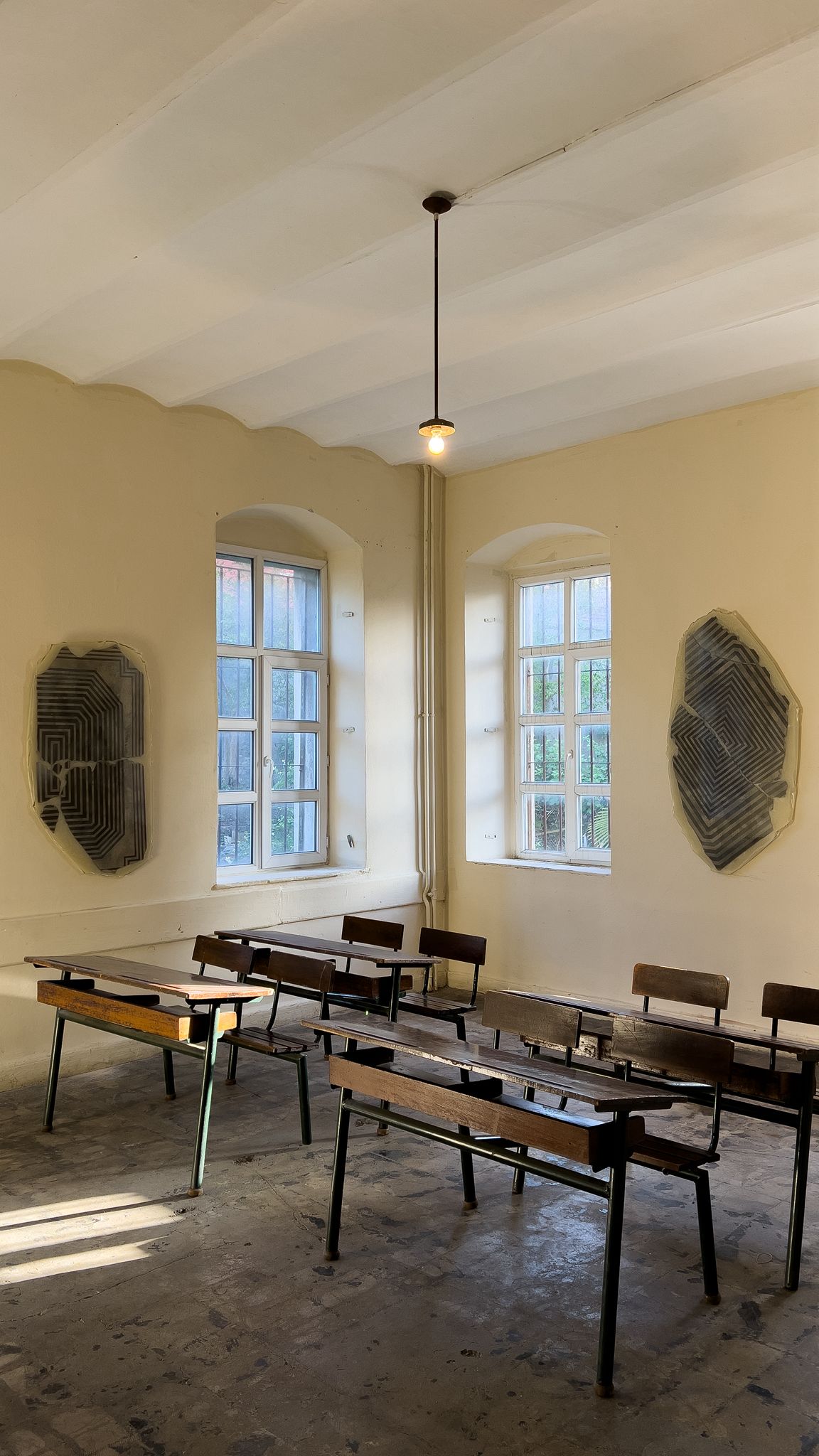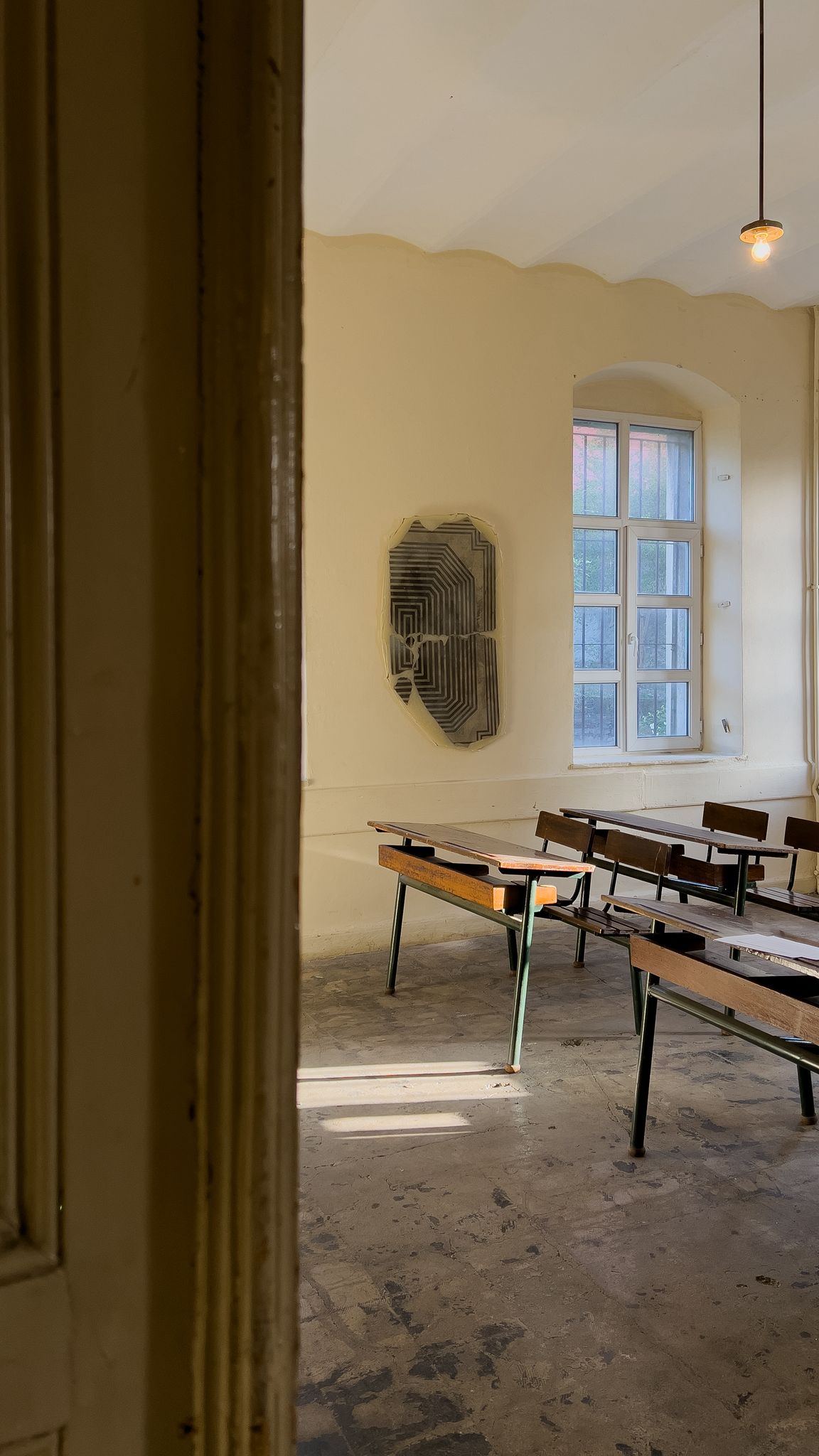

Between May 12 and May 30, 2026, the exhibition I Wouldn’t Want to Be Anyone Else, curated by Trexit and held at Yuvakimyon Greek Girls’ High School, brings together seven galleries, each presenting one artist.
Departing from the idea that students who once shared the same desks eventually transformed into different lives, characters, and stories, the exhibition reminds us that identity cannot be confined to a single role or definition. Through a curatorial structure that turns each classroom into a separate world, the exhibition invites viewers to reflect on memory, transformation, and the construction of self. The different narratives brought together within the same space also confront visitors with their own pasts: “Who were we when we sat at the same desks, and who have we become now?”
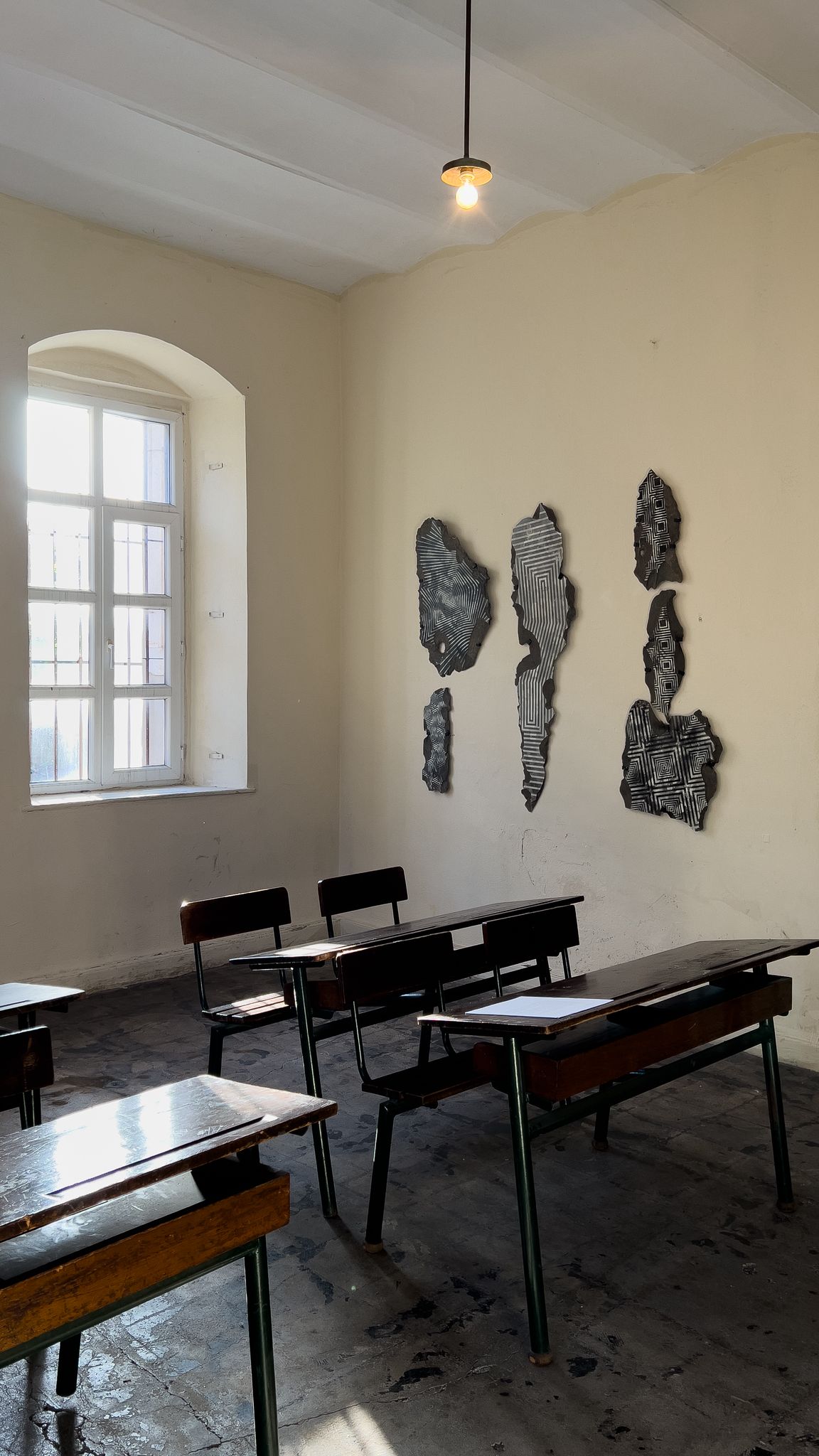
Participating with his series Objects from the Excavation Site, Hasan Pehlevan focuses on themes of belonging, identity, and the destruction of historical and cultural structures, while investigating the effects of urbanization and transformation on people, cities, and collective memory. By examining urban textures that are rapidly constructed and just as rapidly demolished, the artist observes how new cultural codes emerge alongside destruction and raises the question of whether it is still possible to leave a cultural legacy for the future.
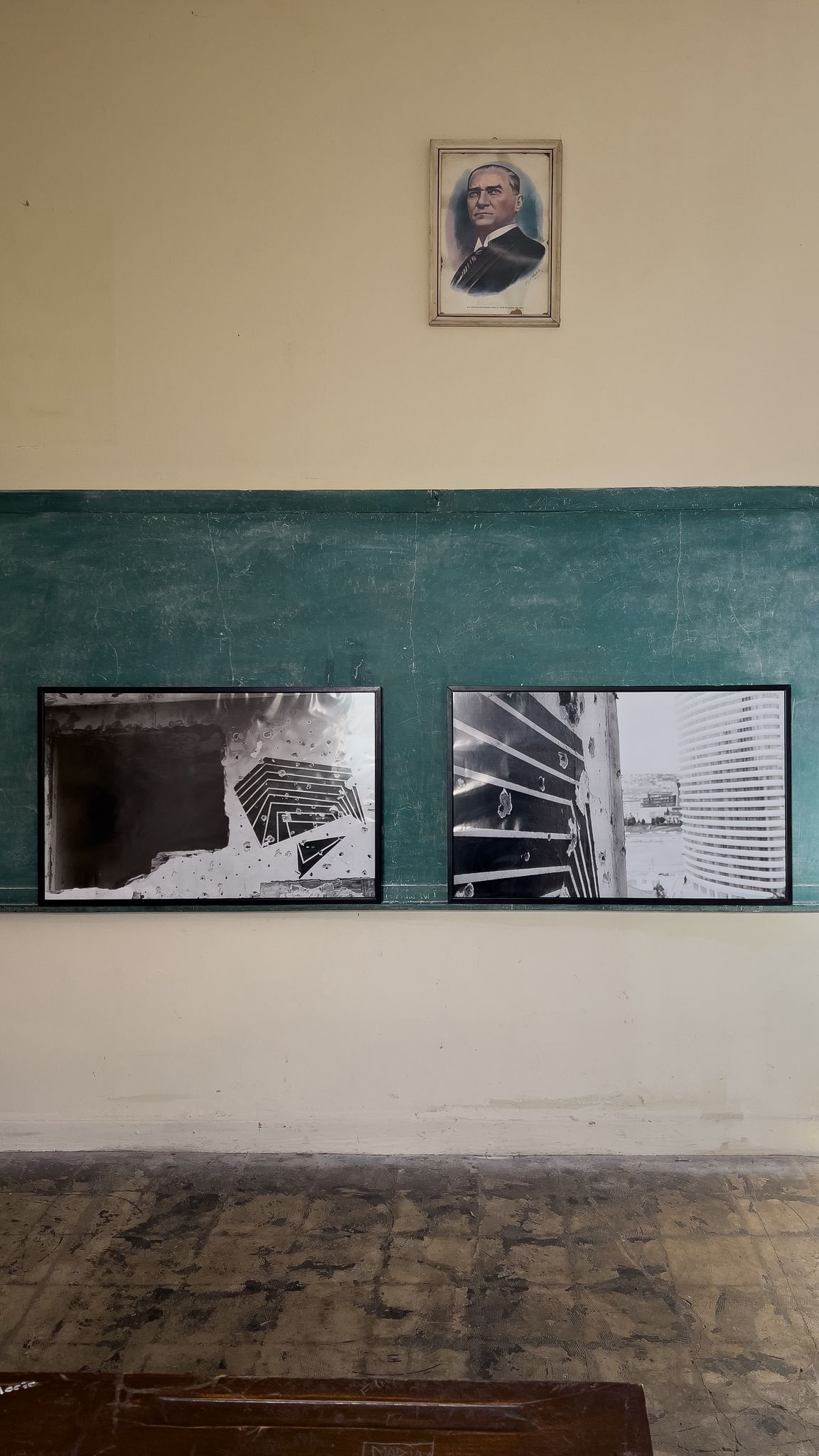
Pehlevan’s murals document the erasure of a city’s memory while simultaneously revealing, like an archaeologist, the memory embedded within the “artifact” itself. Although the forms in the Objects from the Excavation Site series initially resemble fragments from an archaeological excavation or remnants of stone, closer inspection reveals them to be anonymous, functionless objects rather than actual stones. This approach questions how traces of the past become detached from their original context and emptied of their memory. Reencountered within a school space that once carried a shared history, these traces intersect with the exhibition’s broader concerns of memory, transformation, and belonging. Pehlevan’s works make visible not only physical destruction, but also shifting identities, erased collective memory, and the ways in which remaining traces can acquire new meanings over time.
All of the works presented in the exhibition were produced through interventions and artistic actions carried out by the artist in Fikirtepe between 2014 and 2017, during a period of intense urban transformation. By drawing anonymous forms onto the demolition sites of Fikirtepe, Pehlevan poses the question: Can art have the power to stop destruction? For the artist, destruction affects not only architecture, but also ecology, sociology, and anthropology, making it a multilayered process of transformation. Witnessing the disappearance of historical structures without preservation, the artist conceives his works as a form of visual archive and cultural testimony against the erasure of urban memory.